
Dog Cruciate Ligament Surgery (TPLO) Gold Coast | The Vet Lounge
If your dog is suddenly limping, holding up a hind leg, or struggling to stand after exercise, they may have a ruptured cranial cruciate ligament (CCL).
Similar to an ACL tear in humans, a cruciate ligament injury is the most common cause of hindlimb lameness in dogs. At The Vet Lounge, we provide advanced orthopaedic assessments and surgical repairs to restore your dog’s mobility and get them back to pain-free adventures.
Understanding Cruciate Ligament Injury in Dogs
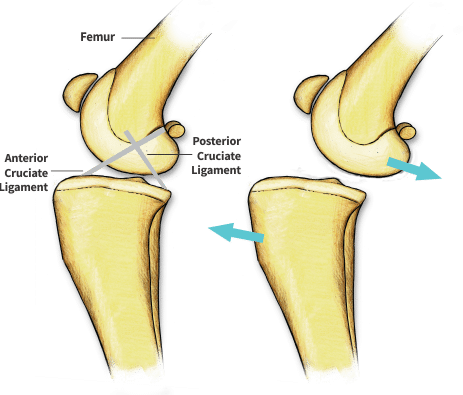
The canine knee joint (stifle) relies on the cranial and caudal cruciate ligaments to cross over inside the joint, preventing the bones from sliding back and forth. When the cranial ligament tears, the joint becomes unstable, causing friction, pain, and eventual arthritis.
This injury typically happens in one of three ways:
-
Degenerative (Chronic): The ligament fibres progressively weaken over time, slowly worsening until a minor movement causes a tear.
-
Acute (Sudden): A sudden, forceful twisting injury—such as a dog pivoting quickly while chasing a ball or landing awkwardly from a jump.
-
Acute-on-Chronic: A sudden force completely tears a ligament that was already weakened by long-term degeneration.
While any dog can suffer a CCL tear, it is most frequently diagnosed in middle-aged, overweight, or medium-to-large breed dogs.
Advanced Dog Cruciate Surgery Options
A torn ligament cannot heal on its own, and non-surgical management rarely restores full function for active or larger dogs. Surgery is the only reliable way to restabilize the stifle joint.
Depending on your dog’s size, age, and activity level, we will recommend the most appropriate surgical technique:
-
TPLO (Tibial Plateau Leveling Osteotomy): The gold standard for larger or active dogs. It changes the biomechanics of the knee by cutting and rotating the bone, eliminating the need for the ligament entirely.
-
TTA (Tibial Tuberosity Advancement): Shifting the front of the shin bone forward to alter the pull of the patellar tendon, stabilizing the joint during movement.
-
TTO (Triple Tibial Osteotomy): A specialized technique combining elements of both TPLO and TTA.
-
De Angelis (Extracapsular Repair): Utilizing a strong, medical-grade nylon suture outside the joint to mimic the stabilizing job of the original ligament, ideal for smaller breeds.
During your consultation, your surgeon will open and explore the joint space to clean out damaged ligament remnants and carefully inspect the meniscus for tears.
Why Choose The Vet Lounge for Your Dog’s Orthopaedic Surgery?
We understand that surgery can be a stressful experience for both you and your pet. We treat your dog like family, providing specialized care in our state-of-the-art orthopaedic suites.
-
Expert Veterinary Surgeon: Cruciate surgeries at our clinics are performed by our highly experienced veterinarian, Dr. Andres Townsend, who brings extensive knowledge to complex orthopaedic procedures.
-
Advanced Anaesthetic Care: Your dog is continuously monitored by a dedicated senior veterinary nurse. We use precision heating systems that circulate warm air through specialized blankets to maintain consistent body temperature, ensuring a safer procedure and faster recovery.
-
All-Inclusive Rehabilitation: Successful recovery doesn’t end when the surgery is over. We are proud to integrate veterinary medicine with dedicated physical therapy.
Included in Our Cruciate Repair Package:
To maximize surgical success and speed up healing, every cruciate repair includes:
-
A 1-Hour Consultation at the Canine Rehab Centre: A comprehensive mobility and recovery assessment by Janet, our in-house canine rehabilitation practitioner.
-
Targeted Laser Therapy: Non-invasive photobiomodulation to drastically reduce post-op swelling, alleviate pain, and accelerate deep tissue healing.
-
Professional Manual Therapy: Specialized massage and joint mobilization to keep your dog comfortable and prevent muscle tighteness during their recovery.
With our rehabilitation team and orthopaedic surgeon working together under the same roof, your pet receives completely seamless care.
Convenient Gold Coast Locations & Easy Payment Options
We perform advanced orthopaedic surgeries across our three convenient Gold Coast vet clinics. Contact your local team today to schedule an assessment:
To help you focus entirely on your pet’s health rather than upfront costs, we proudly accept VetPay payment plans and GapOnly® real-time pet insurance claims.
Don’t let your pet live in discomfort. Call your nearest clinic to book a cruciate consultation today.
How Vets Diagnose a Ruptured Cruciate Ligament
Because a stable knee is vital for your dog’s long-term health, our veterinarians use targeted diagnostic techniques to check for joint laxity. Because dogs naturally tense their muscles when sore, we often utilize heavy sedation or general anesthesia to ensure a thorough, pain-free examination.
Our diagnostic process includes:
-
The Cranial Drawer Test: Your vet gently manipulates the femur and tibia. If the tibia slides forward like a drawer, it confirms the stabilizing ligament is torn.
-
The Tibial Thrust Test: We flex the hock joint to mimic weight-bearing forces, checking if the top of the shin bone thrusts forward abnormally.
-
Digital X-rays: Advanced imaging allows us to evaluate the extent of joint fluid buildup (effusion) and check for signs of secondary osteoarthritis.
Frequently Asked Questions
How long is the recovery time after dog cruciate surgery?
Generally, strict confinement and leash-only walks are required for the first 6 to 8 weeks. Most dogs return to normal, unrestricted activity around 12 weeks post-op, especially when paired with our included Canine Rehab Centre program.
Can a dog recover from a torn cruciate ligament without surgery?
While very small dogs (under 5-10kg) sometimes manage with strict rest and medication, larger dogs rarely regain pain-free mobility without surgical stabilization. Severe, irreversible arthritis typically develops without intervention.
What does the surgery do?
Surgically, the stifle joint is opened up and explored to confirm the diagnosis of a partial or complete cruciate ligament rupture. At this time remaining strands of ligament can be cleaned out, the joint flushed and the meniscus inspected and treated for tears. The surgeon can then begin the repair.
Will my dog need surgery on the other knee too?
Unfortunately, it is very common. Studies show that approximately 40% to 50% of dogs that rupture one cranial cruciate ligament (CCL) will go on to rupture the ligament in their other knee, typically within 12 to 18 months.
There are two main reasons for this:
-
Genetics and Structure: Cruciate disease in dogs is usually a degenerative condition caused by their natural joint anatomy and genetics, meaning both knees are prone to the same structural weaknesses.
-
Overcompensation: When a dog injures one leg, they naturally shift their weight and put immense extra strain on the remaining good hind leg, which can cause an already weakened ligament to fail.
How we help minimize the risk: While we cannot change your dog’s genetics, our specialized post-op care at the
Is my dog too old for cruciate surgery?
Age itself is not a disease, and dogs are rarely “too old” for cruciate surgery. While it is natural to feel anxious about anesthesia in senior pets, a dog’s overall health and quality of life are far more important factors than their age in years.
If an older dog is otherwise healthy, correcting a ruptured ligament can give them back their mobility, significantly reduce chronic pain, and add years of happy, active life.
How we keep your senior dog safe at The Vet Lounge: We take extra precautions to ensure that advanced orthopaedic surgery is as safe as possible for our older patients:
-
Pre-Analytic Health Screening: Before any procedure, we perform comprehensive blood tests to evaluate your dog’s liver and kidney function, ensuring they can safely process anesthesia.
-
Advanced Anesthetic Care: Your senior dog is continuously monitored one-on-one by a dedicated senior veterinary nurse from start to finish.
-
Precision Temperature Control: Older dogs struggle to regulate their body temperature under anesthesia. We use advanced heating systems that circulate warm air through specialized blankets to keep them perfectly warm, which dramatically speeds up their recovery time.
-
Gentle, Tailored Rehab: Our post-op packages include a specialized consultation at our
Canine Rehab Centre
During your initial consultation,
What are the signs that my dog has a ruptured cruciate ligament?
A ruptured cruciate ligament can happen suddenly during play or develop gradually over time. The most common signs to watch for include:
-
Sudden Hind Leg Lameness: Your dog may suddenly start limping, holding a back leg completely off the ground, or just “toe-touching” (barely letting their toes brush the floor).
-
The “Sit Test” (Sitting Crooked): When a dog has a sore knee, they cannot comfortably bend it to sit squarely. Instead, they will sit with the painful leg tucked under them or splayed out to the side.
-
Stiffness After Rest: You might notice your dog struggles to stand up after sleeping or resting, with the stiffness easing slightly once they warm up.
-
Swelling or Thickening of the Knee: Over time, fluid builds up inside the joint. You may notice the inside of their knee joint feels thicker, harder, or more swollen than the healthy leg.
-
A “Clicking” Sound: If the injury has also caused a tear to the meniscus (the cushioning cartilage inside the knee), you may actually hear a distinct clicking or popping sound when your dog walks or bends their leg.
If your dog is showing any of these signs, we highly recommend booking a specialized orthopaedic assessment. Our veterinarians can perform a gentle examination—often under light sedation to ensure it is completely pain-free—to check for joint laxity and get your pet back on the path to comfort.
If you’re concerned your pet may have ruptured their cruciate and want to talk with our Surgeon
TPLO Client Story
Cruciate repairs at The Vet Lounge
Expert Orthopaedic Care & Recovery on the Gold Coast
At
We are here to support you and your companion every step of the way—from their very first consultation through to their final rehab session.
Post surgery our rehab practitioner Janet and the Canine Rehab Centre team are here to help your dog recover safely and efficiently, ensuring the best possible outcome. All under the same roof as your pets surgeon.
For more information visit www.caninerehabcentre.com.au
Easy payment
options available:



Easy payment options available: